


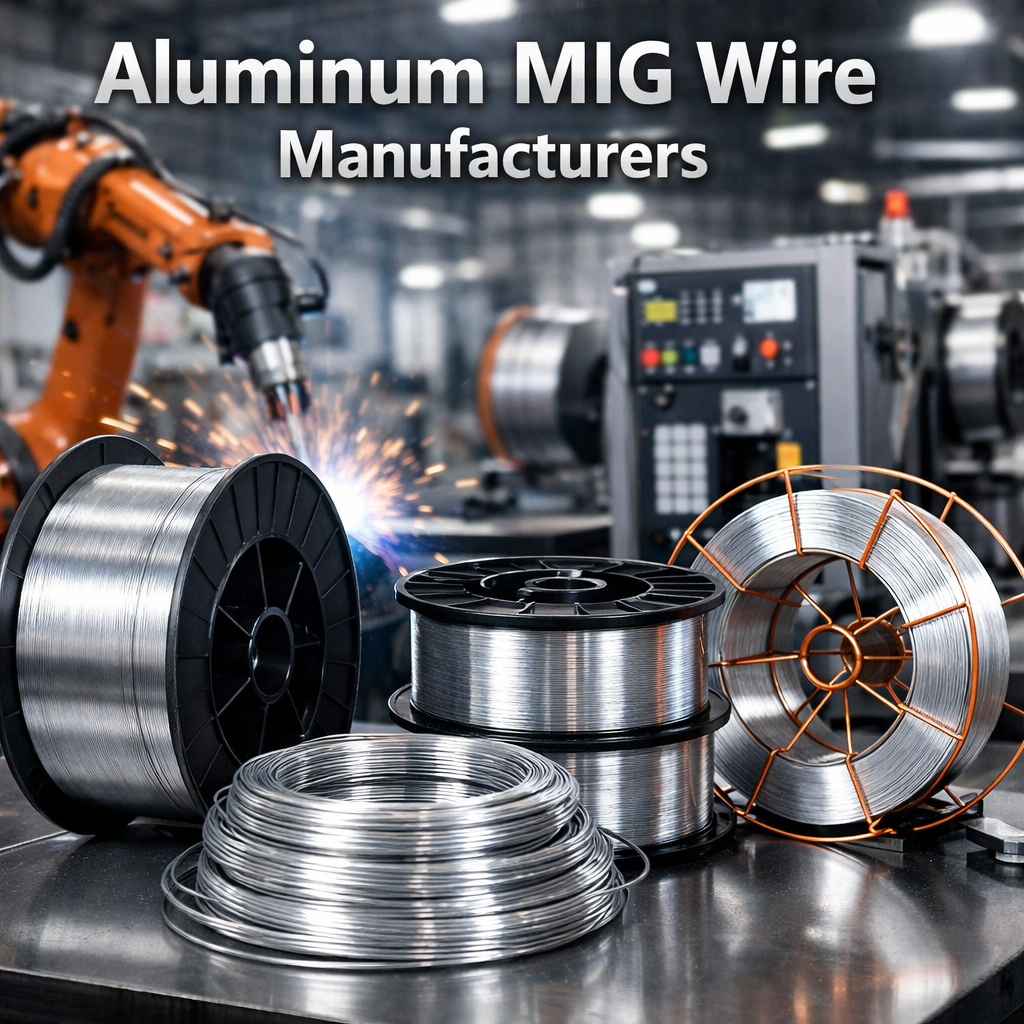
Aluminum Welding Wire ER5356 is widely used in aluminum fabrication, but many welders still ask a practical question: is ER5356 suitable for aluminum? The answer is yes, and understanding why requires a closer look at its composition, compatibility, and real-world performance across different applications.
ER5356 belongs to the 5xxx series of aluminum-magnesium filler metals. It is specifically designed to weld non-heat-treatable aluminum alloys such as 5083, 5086, and 5454, along with selected 6xxx series alloys. Its magnesium content, typically between 4.5 and 5.5 percent, allows it to match well with these base metals, ensuring consistent metallurgical bonding and stable weld quality. This compatibility makes it a reliable choice in industries where aluminum structures are common, including transportation, marine fabrication, and general manufacturing.
One of the key reasons ER5356 is suitable for aluminum lies in its mechanical properties. The weld deposits it produces offer a balanced combination of tensile strength and ductility, which is important when welded components are exposed to dynamic loads or vibration. In structural applications, such as frames, supports, and panels, this balance helps maintain joint integrity over time without introducing unnecessary brittleness.
Weldability is another factor that supports its widespread use. ER5356 provides smooth arc characteristics and steady feeding performance, particularly in MIG welding processes. Welders often appreciate its predictable puddle behavior, which allows for better control during both thin and thick section welding. In TIG welding, it also performs consistently, producing clean and uniform weld beads when proper technique is applied. These characteristics reduce the learning curve for operators and contribute to efficient workflow in fabrication environments.
Corrosion resistance is especially important when working with aluminum, and ER5356 performs well in this regard. The magnesium content enhances resistance to oxidation and environmental exposure, making it suitable for applications in marine and outdoor conditions. Structures such as boat components, storage tanks, and transport equipment benefit from this property, as they are often exposed to moisture and varying climates.
Another advantage is its appearance after finishing processes. When anodized, welds made with ER5356 tend to blend more naturally with the base metal compared to some silicon-based fillers. This is valuable in applications where visual consistency matters, such as architectural elements or consumer-facing products.
However, there are also considerations to keep in mind. ER5356 is not recommended for prolonged service at elevated temperatures, typically above 150°F (65°C). In such environments, the magnesium content can increase susceptibility to stress corrosion cracking over time. For high-temperature applications, alternative filler metals may be more appropriate. Additionally, while it works well with many aluminum alloys, selecting the correct filler should always involve evaluating base material composition and service conditions.
In practical terms, ER5356 is suitable for a wide range of aluminum welding tasks. It is commonly used in shipbuilding, automotive parts, pressure vessels, and structural assemblies where strength, corrosion resistance, and weld consistency are required. Its versatility allows fabricators to apply it across different projects without frequent changes in welding parameters or consumables.
For businesses and fabricators seeking dependable aluminum filler materials, Aluminum Welding Wire ER5356 remains a widely accepted option due to its balanced performance and adaptability. To learn more about product specifications and available options, visit https://www.kunliwelding.com/ for further details.

 Polski
 Arabic
 French
 Spanish
 Portuguese
 Deutsch
 Turkish
 Dutch
Dutch
 Italiano
 Russian
 Romaian
 Portuguese (Brazil)
 Greek
Greek