


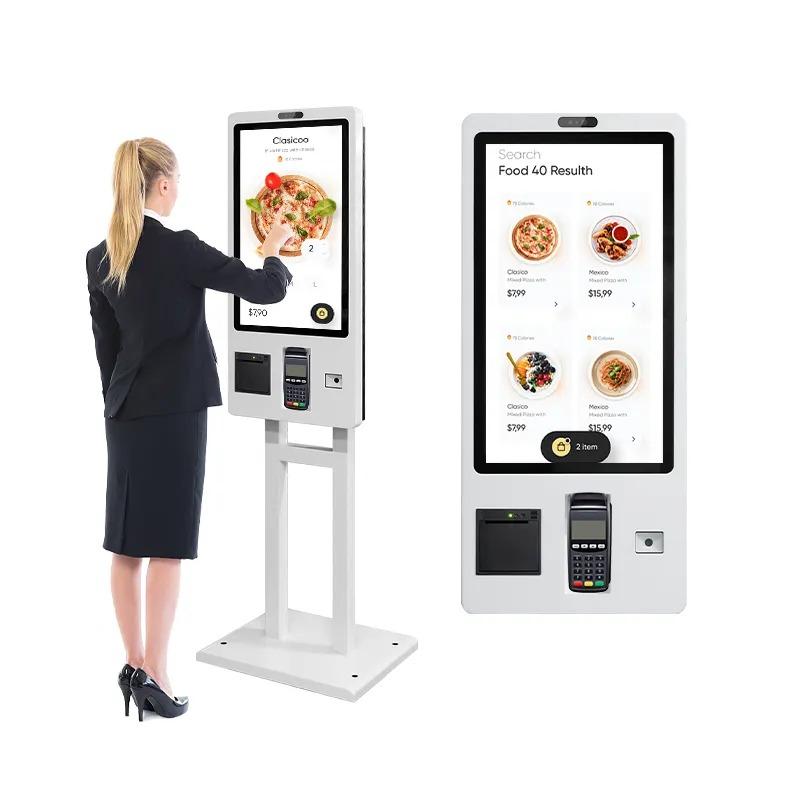
Saudi Arabia is undergoing a retail revolution driven by digital innovation and evolving consumer expectations. One of the most prominent technologies at the forefront of this transformation is the smart kiosk. These intelligent self-service systems are reshaping how businesses operate and how customers interact with brands.
This article explores how kiosk saudi arabia technology is redefining retail landscapes, enhancing efficiency, and paving the way for a smarter future.
Understanding Smart Kiosk Technology
Smart kiosks are advanced, interactive machines that allow users to complete transactions or access services independently. Equipped with touchscreens, secure payment systems, and cloud connectivity, these kiosks provide a seamless and user-friendly experience.
They go beyond simple vending or ticketing machines by incorporating:
-
AI-powered interfaces
-
Real-time data processing
-
Integration with mobile apps and online systems
This makes them highly versatile across various sectors.
Digital Transformation and Vision 2030
Saudi Arabia’s Vision 2030 initiative emphasizes technological advancement and economic diversification. Smart kiosks align perfectly with this vision by promoting automation, reducing manual processes, and enhancing service delivery.
Retailers and service providers are increasingly adopting kiosks to:
-
Improve operational efficiency
-
Deliver faster customer service
-
Support the shift toward a digital economy
This trend is especially visible in urban hubs where innovation is rapidly embraced.
Key Industries Adopting Smart Kiosks
Retail and Shopping Centers
Shopping malls and retail outlets are deploying kiosks for:
-
Self-checkout systems
-
Product discovery
-
Loyalty program integration
These features enhance customer convenience while reducing congestion at billing counters.
Food and Beverage Sector
Restaurants and quick-service chains are using kiosks for order placement and payment. Customers can browse menus, customize meals, and complete transactions within minutes.
This not only speeds up service but also reduces order errors.
Transportation and Travel
Airports and transport hubs use kiosks for:
-
Ticket booking
-
Check-ins
-
Information services
These systems streamline passenger flow and minimize waiting times.
Healthcare and Public Services
Hospitals and government institutions are integrating kiosks for appointment scheduling, registration, and information dissemination, improving accessibility and efficiency.
Advantages of Smart Kiosks
Improved Customer Satisfaction
With minimal waiting time and intuitive interfaces, kiosks enhance the overall user experience.
Operational Efficiency
Businesses can handle more customers simultaneously without increasing staff, leading to better productivity.
Data-Driven Insights
Smart kiosks collect valuable data on customer behavior, enabling businesses to tailor services and marketing strategies.
Scalability
Kiosk systems can be easily expanded across multiple locations, making them ideal for growing businesses.
Challenges Facing Implementation
Despite their benefits, smart kiosks come with certain challenges:
-
High Initial Costs: Deployment and customization can require significant investment
-
Maintenance Needs: Regular updates and technical support are essential
-
Digital Literacy Gaps: Some users may find it difficult to adapt initially
-
Security Risks: Protecting user data remains a top priority
Addressing these challenges is key to maximizing the potential of kiosk systems.
Emerging Trends in Smart Kiosk Deployment
AI-Driven Personalization
Future kiosks will deliver highly personalized experiences based on user preferences and past interactions.
Contactless and Biometric Systems
With increased focus on hygiene and security, kiosks will incorporate facial recognition, fingerprint scanning, and voice commands.
Integration with Smart Ecosystems
Kiosks will become part of larger smart city infrastructures, connecting with IoT devices and digital platforms.
Sustainability Initiatives
Energy-efficient designs and reduced paper usage will make kiosks more environmentally friendly.
The Road Ahead
The future of retail in Saudi Arabia is closely tied to technological innovation. Smart kiosks are not just a trend but a long-term solution that enhances convenience, efficiency, and accessibility.
As businesses continue to invest in kiosk saudi arabia solutions, the retail experience will become more interactive, data-driven, and customer-focused. These systems will play a critical role in bridging the gap between traditional retail and the digital world.
Conclusion
Smart kiosks are transforming the retail and service sectors across Saudi Arabia. By offering faster service, reducing operational costs, and improving customer engagement, they are setting new standards in digital retail.
With ongoing advancements in AI, IoT, and automation, smart kiosks will continue to evolve—making them a cornerstone of the Kingdom’s journey toward a fully digital economy.

 Polski
 Arabic
 French
 Spanish
 Portuguese
 Deutsch
 Turkish
 Dutch
Dutch
 Italiano
 Russian
 Romaian
 Portuguese (Brazil)
 Greek
Greek