


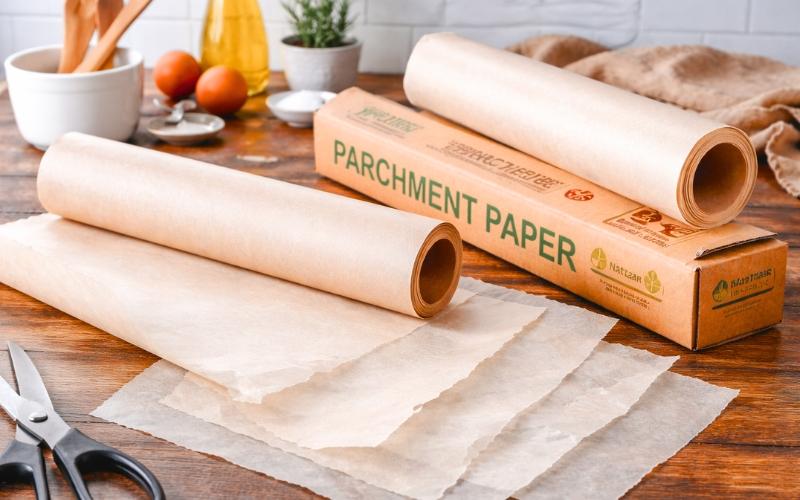
Baking and cooking often require precision, especially when working with delicate recipes. One widely used kitchen tool that improves baking performance is parchment paper. It provides a non-stick surface that prevents food from sticking to baking trays and helps maintain consistent cooking results.
Professional kitchens and home bakers rely on parchment paper to simplify preparation and cleanup. The protective barrier between food and hot metal pans reduces the risk of burning or damaging baked goods.
However, not all parchment products are identical. Understanding the different types available can help cooks select the right option for baking, roasting, and food preparation tasks.
What Is Parchment Paper and How It Works
Parchment paper is a specially treated paper designed to tolerate oven heat while providing a non-stick cooking surface. The material is produced from cellulose fibers and treated during manufacturing to improve strength and heat resistance.
Most modern parchment products include a thin silicone coating. This coating creates a smooth surface that prevents food from bonding with metal pans during baking.
Because of its heat tolerance and non-stick properties, parchment is commonly used for baking cookies, cakes, pastries, and roasted foods.
Why Different Types of Baking Liners Exist
Different baking tasks require specific materials. Some recipes involve high heat, while others require delicate handling. This is why parchment products are manufactured in multiple forms and thickness levels.
Commercial kitchens often select different parchment styles depending on production volume and cooking methods. For example, bakeries may prefer precut sheets, while home cooks often use rolls.
Understanding these differences allows cooks to improve baking efficiency and food presentation.
Bleached vs Unbleached Baking Sheets
Key differences between the two options
- Bleached parchment sheets are white and processed to remove natural color
- Unbleached parchment sheets retain a natural brown appearance
- Both types provide similar non-stick performance
- Unbleached options are often preferred for eco-friendly kitchens
- Bleached sheets are commonly used in commercial bakeries for presentation
Bleached parchment typically undergoes additional processing during manufacturing. However, modern food-grade products meet safety standards for cooking and baking.
Pre-Cut Sheets vs Rolls
Choosing the right format for your kitchen
- Pre-cut sheets save time during baking preparation
- Rolls allow flexible sizing for different trays
- Sheets are commonly used in bakeries and restaurants
- Rolls are convenient for home kitchens
- Both provide the same non-stick performance
Large commercial kitchens usually rely on pre-cut sheets because they simplify tray preparation during high-volume baking operations.
Silicone-Coated vs Quilon-Coated Paper
Understanding coating technologies
- Silicone-coated paper offers stronger non-stick performance
- Quilon-coated paper uses chromium salts to create release properties
- Silicone coatings are generally preferred for food safety standards
- Quilon coatings are less commonly used today
- Silicone surfaces often tolerate higher oven temperatures
Because silicone coatings are more durable, they are widely used in modern parchment manufacturing.
Comparison of Common Baking Paper Types
Understanding the characteristics of different parchment types helps cooks select the most suitable option for specific recipes.
| Paper Type | Appearance | Non-Stick Strength | Typical Use |
| Bleached parchment | White | Strong | Commercial baking |
| Unbleached parchment | Natural brown | Strong | Eco-friendly kitchens |
| Pre-cut sheets | Pre-sized | Strong | Bakeries and restaurants |
| Parchment rolls | Custom size | Strong | Home baking |
Selecting the correct type ensures efficient baking preparation and reliable cooking results.
Heat Resistance and Cooking Performance
Heat tolerance is one of the most important features of parchment products. Most food-grade parchment papers are designed to withstand oven temperatures between approximately 420°F and 450°F depending on the manufacturer.
This heat resistance allows parchment sheets to work well for cookies, pastries, roasted vegetables, and baked meats.
Even heat distribution also helps reduce hot spots on baking trays, which improves consistency in baked goods.
Commercial Uses in Bakeries and Food Production
Large bakeries and restaurants rely on parchment products to maintain production efficiency. Lining trays allows staff to prepare multiple baking batches without constantly cleaning pans.
Parchment sheets also protect delicate pastries and desserts from damage during removal from trays.
Food production facilities frequently use baking liners when preparing packaged baked goods, ensuring consistent quality across large batches.
Tips for Choosing the Right Baking Liner
Selecting the right baking liner depends on cooking style and kitchen requirements. Pre-cut sheets are ideal for commercial kitchens because they save preparation time.
Roll formats are useful for home kitchens where trays vary in size. They allow flexible cutting for different baking pans.
When purchasing parchment, it is also important to consider heat resistance and coating quality to ensure reliable performance during cooking.
Conclusion
Different types of baking liners exist to meet the needs of both home cooks and professional kitchens. Understanding these variations helps improve baking efficiency and food presentation.
Whether using sheets, rolls, bleached paper, or natural options, parchment paper remains a valuable tool in modern cooking.
Choosing the correct parchment type ensures consistent baking results, easier cleanup, and improved kitchen productivity.
Frequently Asked Questions
What are the main types of parchment paper?
The main types include bleached parchment, unbleached parchment, pre-cut sheets, and roll formats used for baking and cooking.
Is parchment paper reusable?
Some parchment sheets can be reused if they remain clean and undamaged after baking.
What temperature can parchment paper withstand?
Most parchment products tolerate oven temperatures up to about 420–450°F, depending on the manufacturer.
What is the difference between bleached and unbleached parchment paper?
Bleached parchment is white due to additional processing, while unbleached parchment retains a natural brown color.
Why do bakeries use parchment paper?
Bakeries use parchment to prevent sticking, maintain consistent baking results, and reduce cleaning time between batches.

 Polski
 Arabic
 French
 Spanish
 Portuguese
 Deutsch
 Turkish
 Dutch
Dutch
 Italiano
 Russian
 Romaian
 Portuguese (Brazil)
 Greek
Greek