


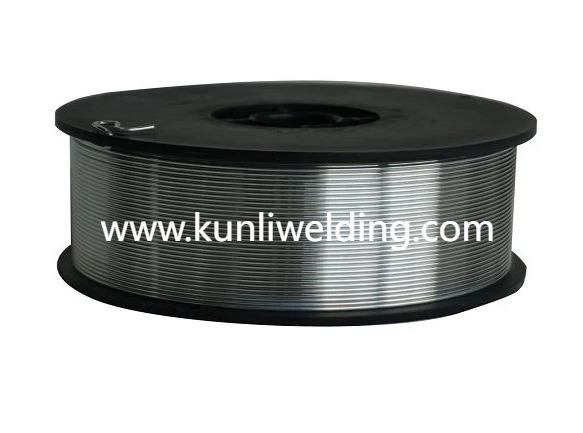
Welding engineers who work with marine structures or high-pressure containment systems know the frustration of chasing down an alloy that balances corrosion resistance, weld strength, and process reliability all at once. Few filler materials consistently check every box, but one has earned a reputation that keeps appearing in code requirements across industries. The use of Aluminum Welding Wire ER5183 in pressure vessel fabrication and shipbuilding is not accidental — it reflects decades of real-world performance in environments that punish materials without mercy.
The Chemistry Behind the Confidence
The reason engineers keep specifying this wire begins at the compositional level. ER5183 belongs to the aluminum-magnesium family of alloys, and its magnesium content places it in a range that produces a weld deposit with notably strong resistance to saltwater corrosion and chemical exposure. When a pressure vessel must hold reactive media or when a ship hull faces constant seawater contact, the weld joint cannot be the weak link. The metallurgical integrity of the deposit — its grain structure, oxide film stability, and resistance to stress corrosion cracking — needs to hold up year after year without visible degradation.
What makes this alloy especially useful for code-governed work is that its properties remain consistent when the wire itself is manufactured and stored correctly. The surface condition of the wire directly influences arc behavior. Contamination, oxidation, or moisture absorption on the wire surface will translate into porosity, inconsistent fusion, or hydrogen-related defects in the finished weld. Engineers writing welding procedure specifications cannot afford variability at this level. A wire that arrives with a clean, stable surface condition makes procedure qualification smoother and production welding far more predictable.
Meeting Code Requirements Without Workarounds
Pressure vessel codes and shipbuilding classification rules do not simply suggest filler materials — they specify them. When a fabricator works within these frameworks, deviating from approved filler designations requires additional qualification testing, extra documentation, and sometimes third-party review. Filler alloys that consistently appear on approved materials lists reduce that administrative burden significantly.
ER5183 appears in many of these approved lists because its deposit properties, particularly its tensile strength in the as-welded condition and its ductility, align with the mechanical requirements that pressure vessel and marine codes enforce. Engineers do not need to work around the code when this wire is selected — they work with it. That alignment between wire capability and code expectation is something welding process developers value when they are trying to qualify procedures efficiently and keep projects on schedule.
Process Stability and Repeatability
For welding process developers, the day-to-day challenge is not just selecting the right alloy — it is ensuring the welding process behaves the same way on the hundredth joint as it did during qualification. Aluminum Welding Wire ER5183 supports that goal when the wire itself maintains consistent geometric stability. Diameter tolerances, cast and helix of the wire spool, and the surface cleanliness all affect how smoothly the wire feeds through a torch and how consistently the arc establishes and maintains itself.
A wire that feeds erratically creates burn-backs, stoppages, and inconsistent bead geometry. A wire with surface contamination produces porosity that requires repair. Either scenario increases cost and creates quality risk on fabrication projects where inspection standards are unforgiving. Welding process developers who have qualified procedures around a reliable wire understand that the mechanical properties of the deposit mean nothing if the wire cannot be fed and melted consistently shift after shift.
Why Engineers Keep Coming Back
The ongoing specification of this alloy in critical welding applications says something about how the engineering community evaluates long-term reliability. It is not always about finding the newest material solution. Sometimes the most valuable choice is the one that has proven itself in demanding service conditions, integrates naturally into existing qualified procedures, and supports the repeatability that quality management systems demand.
Shipbuilding environments impose cyclic loading, vibration, and constant exposure to corrosive media. Pressure vessels in industrial service may experience thermal cycling and internal pressure fluctuations throughout their service life. The weld joints in both applications need to perform without requiring frequent remediation. An alloy with a strong performance record in these conditions does not get replaced without a compelling reason.
For welding engineers building new procedure qualifications or process developers refining existing ones, understanding the full picture of why a given wire performs the way it does — from its chemistry to its surface condition to its feedability — helps inform every stage of the welding program. If you are evaluating filler options for a pressure vessel or marine fabrication project, exploring technical support from a qualified wire supplier can sharpen your process decisions. More information is available at https://kunliwelding.psce.pw/8p6qdv — could the right filler wire be the piece your welding procedure is still missing?

 English
 Polski
 Arabic
 French
 Spanish
 Portuguese
 Deutsch
 Turkish
 Dutch
Dutch
 Russian
 Romaian
 Portuguese (Brazil)
 Greek
Greek