


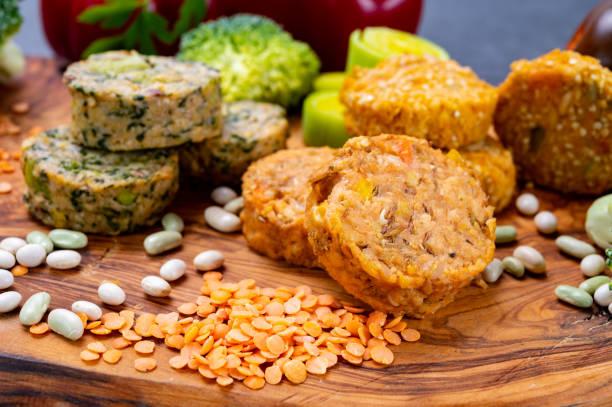
Revolutionary advances in food technology are redefining possibilities within the alternative protein sector, enabling creation of products that challenge traditional distinctions between plant-based and animal-derived foods. Cutting-edge research combines molecular gastronomy, bioengineering, and culinary arts to produce alternatives with unprecedented authenticity.
Precision fermentation represents one of the most promising technological frontiers. This process utilizes microorganisms to produce specific proteins identical to those found in animal products, without requiring animal agriculture. The resulting ingredients can be incorporated into plant-based formulations to enhance flavor, texture, and nutritional completeness.
Textured vegetable protein production has evolved significantly through advanced extrusion technologies. High-moisture extrusion creates fibrous structures that closely mimic muscle tissue, providing authentic chew and mouthfeel. Temperature, pressure, and ingredient combinations are precisely controlled to achieve optimal textural characteristics.
Flavor chemistry advancements enable more accurate replication of meat's complex taste profile. Scientists identify and recreate the specific compounds responsible for savory, umami characteristics through natural flavoring systems. Fermentation processes generate flavor precursors that develop during cooking, producing authentic aromas and taste experiences.
Three-dimensional food printing emerges as an innovative production method for creating complex structures with precise marbling, layering, and texture variation. This technology allows customization of nutritional content, flavor distribution, and visual appearance while minimizing waste and optimizing resource utilization.
Ingredient sourcing innovation expands the raw material palette beyond traditional soy and wheat. Novel protein sources including lentils, chickpeas, mung beans, and algae offer diverse nutritional profiles and functional properties. These alternatives address allergen concerns while providing unique taste characteristics and sustainability advantages.
Computational modeling and artificial intelligence accelerate product development cycles. Machine learning algorithms predict ingredient interactions, optimize formulations, and reduce trial-and-error experimentation. This data-driven approach enables faster innovation and more consistent product quality.
FAQ 1: What is precision fermentation in food production? Precision fermentation is a process where microorganisms are programmed to produce specific proteins, fats, or other molecules identical to those found in animal products. This biotechnology creates ingredients without animal agriculture, offering scalability and sustainability advantages for next-generation food products.
FAQ 2: How does technology improve taste and texture? Technology enables precise control over protein structure, moisture content, and ingredient interactions. Advanced extrusion creates authentic fibrous textures, while flavor chemistry replicates complex taste compounds. Combined with culinary expertise, these technologies produce products virtually indistinguishable from conventional meat in sensory characteristics.

 Polski
 Arabic
 French
 Spanish
 Portuguese
 Deutsch
 Turkish
 Dutch
Dutch
 Italiano
 Russian
 Romaian
 Portuguese (Brazil)
 Greek
Greek