


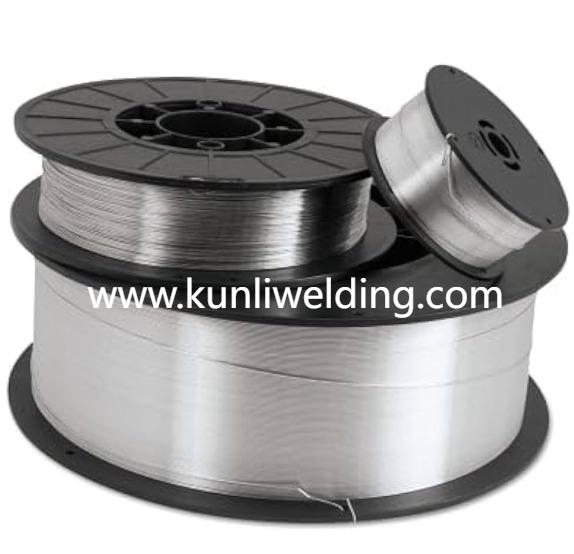
Structural applications demand welded joints that withstand substantial loading without failure, yet achieving adequate strength requires more than simply executing proper welding technique. The filler metal composition fundamentally determines mechanical properties in the solidified weld, making material selection as critical as operator skill or equipment capability. Engineers specifying components for demanding service conditions frequently turn to Kunli Aluminum Welding Wire ER5356 when strength requirements exceed what alternative compositions can reliably deliver. Understanding the metallurgical basis for this strength advantage helps designers make confident material decisions that align with structural performance objectives.
Magnesium content drives the strength characteristics that distinguish this filler metal from silicon bearing alternatives. Magnesium dissolves into the aluminum matrix during solidification, creating solid solution strengthening that elevates tensile properties throughout the weld metal. This strengthening mechanism operates at the atomic level, where magnesium atoms distort the crystal lattice and impede dislocation movement. The result manifests as measurably higher yield and ultimate tensile strength compared to filler metals relying primarily on other alloying strategies.
Design constraints often limit the physical dimensions available for welded joints in weight sensitive applications. Aerospace structures, transportation equipment, and portable machinery face competing demands for strength and minimal mass. When design geometry restricts weld cross sections, engineers must extract maximum load bearing capacity from available material. Higher strength filler metals enable smaller weld sizes that meet structural requirements while minimizing weight penalties, creating design flexibility unavailable with lower strength alternatives.
Load transfer efficiency through welded connections affects overall structural performance in complex assemblies. Joints carrying significant forces benefit from weld metal strength matching or exceeding base material capabilities, ensuring loads distribute evenly without creating stress concentrations at weld interfaces. Strength matched joints prevent premature failure modes where welds become weak links in load paths. This characteristic proves particularly valuable in cyclically loaded structures where fatigue considerations amplify the consequences of strength mismatches.
Ductility accompanies the strength advantages provided by magnesium alloying, creating favorable combinations of load capacity and deformation tolerance. While some strengthening mechanisms sacrifice elongation capability, magnesium additions maintain reasonable ductility alongside elevated strength. This balance allows welded structures to absorb impact loads, accommodate minor fabrication misalignments, and tolerate stress concentrations without brittle fracture. Applications involving dynamic loading or unpredictable service conditions benefit from this combination of strength and toughness.
Corrosion resistance in specific environments influences material selection for structures exposed to aggressive atmospheres or immersion conditions. Magnesium bearing aluminum alloys exhibit favorable electrochemical characteristics in marine environments, making them suitable for vessels, offshore platforms, and coastal structures. The passive oxide films that form on these alloys provide durable protection against atmospheric corrosion while maintaining structural integrity throughout extended service periods. Aluminum Welding Wire ER5356 delivers both mechanical performance and environmental durability in these demanding applications.
Weldability considerations extend beyond simple crack resistance to encompass practical fabrication characteristics affecting productivity and quality. While magnesium bearing filler metals require attention to proper technique and base metal preparation, they accommodate standard welding processes without exotic equipment or unusually complex procedures. Skilled operators produce sound welds reliably once procedures are properly developed and qualified. This accessibility makes high strength welding practical across diverse fabrication environments.
Base material compatibility determines which applications benefit from higher strength filler metals versus those better served by alternative compositions. Common structural aluminum alloys in marine, transportation, and architectural applications pair effectively with magnesium bearing filler metals, creating joints that match base material strength characteristics. Compatibility extends to thermal expansion coefficients, corrosion behavior, and appearance after finishing operations, ensuring welded assemblies perform cohesively rather than exhibiting property mismatches at weld interfaces.
Post weld mechanical properties develop through solidification microstructures influenced by cooling rates and alloy composition. Magnesium additions promote fine grain structures that contribute to strength while maintaining ductility. Grain refinement distributes stresses more uniformly throughout the weld metal, reducing stress concentration points where cracks might initiate. These microstructural characteristics operate continuously throughout the weld, creating consistent properties rather than localized variations.
Repair welding on existing structures often demands filler metals capable of restoring original strength levels despite challenges from residual stresses, service induced damage, or contamination. Higher strength compositions provide margin for uncertainties inherent in repair scenarios where base metal condition may vary from original specifications. This capability enables confidence when conducting maintenance on critical structures where weld performance directly affects safety and reliability.
Joining dissimilar aluminum alloys introduces additional complexity where filler metal selection must accommodate varying base metal chemistries. Aluminum Welding Wire ER5356 provides versatility across multiple base alloy systems, simplifying material management in shops working with diverse aluminum grades. This compatibility reduces inventory complexity while maintaining reliable weld quality across varying project requirements.
Quality assurance considerations include mechanical testing requirements where weld samples must demonstrate specified minimum properties. Higher strength filler metals provide favorable margins above minimum acceptance criteria, reducing rejection rates and facilitating qualification testing. Consistent mechanical properties across production runs support statistical process control initiatives and quality management system requirements.
Industry standards and engineering specifications increasingly reference strength requirements that necessitate capable filler metal selections. Meeting these requirements without overdesigning joint dimensions depends on materials delivering reliable mechanical performance. Compliance with applicable codes and standards becomes straightforward when using filler metals engineered specifically for strength critical applications.
Comprehensive technical resources addressing strength characteristics, application guidelines, and qualification procedures support informed material decisions. Detailed specifications and mechanical property information are available at https://www.kunliwelding.com/ for reference during design development and procedure qualification activities.

 Polski
 Arabic
 French
 Spanish
 Portuguese
 Deutsch
 Turkish
 Dutch
Dutch
 Italiano
 Russian
 Romaian
 Portuguese (Brazil)
 Greek
Greek