


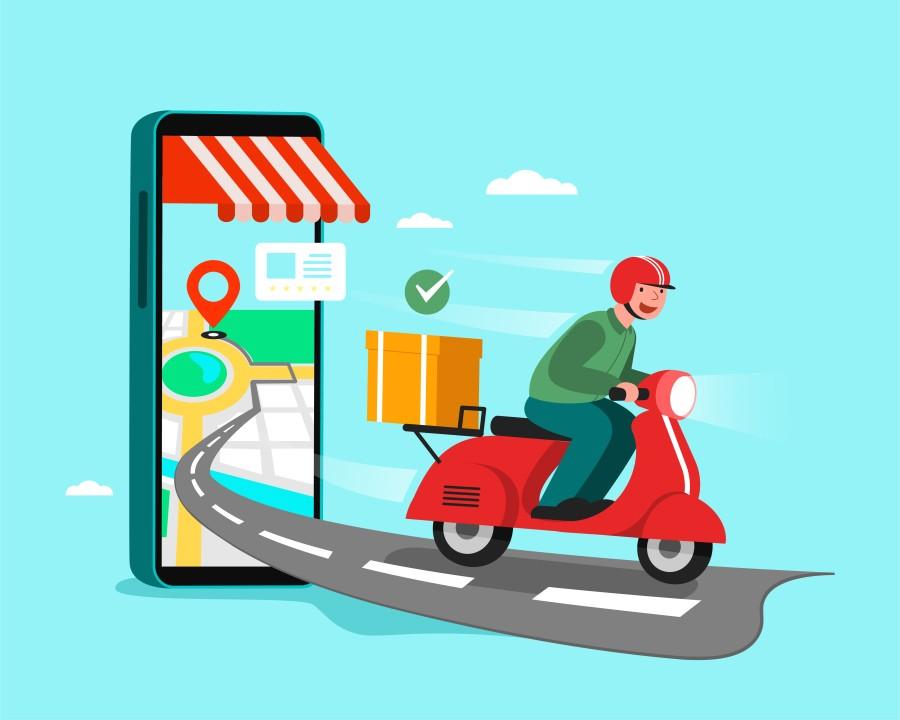
The Instant Grocery market is expanding as consumers demand faster delivery for everyday essentials. Instant grocery typically promises delivery in minutes to an hour, relying on dense urban coverage, curated assortments, and proximity-based fulfillment. The model is built around speed, replacing planned weekly shopping with frequent replenishment. Customers use it for last-minute meals, snacks, household items, and urgent needs like baby products. Operators compete on delivery reliability, product availability, and pricing transparency. Success depends on local execution: micro-fulfillment centers or dark stores, optimized pick paths, and rider availability. Unlike traditional e-commerce groceries, instant models must manage tight delivery windows while protecting cold chain integrity. This makes inventory accuracy and real-time substitution handling critical. While convenience drives adoption, profitability is challenging due to high labor and logistics costs, pushing operators to optimize order density, basket size, and repeat usage in targeted neighborhoods.
Operational design centers on small, high-turnover assortments. Instant grocery providers limit SKUs to speed picking and reduce complexity, focusing on top-selling staples. Demand forecasting drives inventory placement to reduce stockouts and waste, especially for perishables. Picking processes are optimized with zone layouts, handheld scanners, and task assignment. Rider routing is often algorithmic, balancing speed, batching opportunities, and delivery distance. Many operators use bikes and scooters to handle dense city environments efficiently. Cold chain management requires insulated bags, fast handoffs, and temperature monitoring for sensitive items. Customer experience is shaped by accuracy and substitutions; poor substitutions or missing items can erode trust quickly. Therefore, platforms invest in real-time inventory updates and better product images and descriptions. Return and refund policies must be frictionless because minor errors feel more costly when customers pay delivery fees or tips. Over time, the strongest operators build operational discipline similar to logistics networks, treating speed as a measurable service level.
Economics remain the central constraint. Delivery in minutes is expensive, so operators must drive high order frequency and improve unit economics through operational efficiency. Key levers include reducing picking time, improving rider utilization, and increasing average basket size. Pricing and promotions can stimulate adoption but reduce margin. Many providers introduce membership programs to smooth demand and increase retention. Private label and preferred supplier agreements can improve margins, but require scale. Waste management is another driver; poor forecasting can lead to spoilage and shrink, destroying profitability. Some operators partner with established retailers to leverage sourcing and brand trust, while others build their own inventory networks. Regulatory and labor considerations can also affect costs and service models. Data and analytics are increasingly important, helping operators identify neighborhood-level demand patterns, optimize inventory, and reduce delivery failures. Without strong execution and demand density, instant grocery struggles outside high-population areas.
Future success will likely depend on hybrid models and tighter integration with broader retail ecosystems. Many operators will combine instant delivery with scheduled delivery, pickup, or retailer partnerships to balance cost and service. Micro-fulfillment automation may reduce picking labor, improving margins. AI-based forecasting and dynamic routing can further increase efficiency and reduce waste. Consumer demand for convenience will remain strong, but willingness to pay will vary, pushing providers to refine pricing models and service tiers. The most sustainable instant grocery providers will focus on repeatable operations in dense markets, delivering consistent accuracy and speed rather than expanding too quickly. Retailers and marketplaces may also absorb instant capabilities into omnichannel strategies, using stores as fulfillment nodes. For the sector, profitability will come from disciplined geography selection, optimized assortments, and strong customer retention. Instant grocery is therefore evolving from a growth-at-all-costs model into an operational excellence and unit economics challenge.
Top Trending Reports:

 English
 Polski
 Arabic
 French
 Spanish
 Portuguese
 Deutsch
 Turkish
 Italiano
 Russian
 Romaian
 Portuguese (Brazil)
 Greek
Greek