


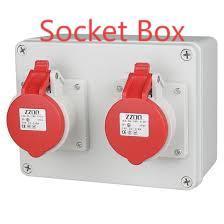
Outdoor power access must balance safety, durability, and ease of use, especially where exposure to rain, dust, and temperature changes is unavoidable. In practical installations, a Nante Outdoor Socket Box placed strategically within the power network reduces failure risks, while a thoughtfully designed Nante Outdoor Socket Box supports safe connections for tools, machinery, and temporary equipment without compromising enclosure integrity. Understanding how design, materials, and installation practices work together is essential for long-term outdoor reliability.
Environmental challenges and design priorities
External locations present challenges rarely encountered indoors. UV radiation degrades plastics, moisture corrodes contacts, and airborne contaminants infiltrate poorly sealed housings. Socket enclosures must therefore prioritize ingress protection, mechanical strength, and resistance to temperature cycling. Designers should evaluate rainfall intensity, washdown frequency, dust levels, and the likelihood of accidental impact when specifying outdoor socket systems.
Materials, structure, and enclosure durability
Material choice underpins enclosure performance. UV-stabilized engineering plastics offer corrosion resistance and electrical insulation, while metal housings provide rigidity and higher impact tolerance. Internal frames should support terminals securely and resist deformation under cable strain. Reinforced cable entry points and molded strain reliefs prevent stress transfer to live components, extending service life in mobile or vibration-prone applications.
Sealing systems and ingress protection
Effective sealing depends on more than a stated IP rating. Gasket geometry, cover alignment, and hinge protection all influence real-world performance. Dual-lip gaskets maintain compression after repeated opening, while captive fasteners prevent uneven sealing caused by lost hardware. Compatible cable glands and conduit fittings ensure that sealing performance is preserved during installation rather than compromised by field improvisation.
Nante Outdoor Socket Box Installation Principles
This section highlights installation considerations aligned with Nante Outdoor Socket Box applications. Proper mounting surfaces, corrosion-resistant fasteners, and correct torque values are critical. Position sockets above anticipated splash or flood levels and allow sufficient clearance for safe plug handling. Consistent labeling and standardized mounting heights improve usability across sites and reduce operator error during equipment changes.
Electrical safety and compliance considerations
Outdoor sockets must comply with regional and international standards governing insulation, grounding, and temperature rise. Shuttered contacts and secure earthing terminals reduce the risk of accidental contact with live parts. Clear rating labels help users select compatible equipment, while internal segregation between live terminals and mounting hardware enhances safety during maintenance.
Thermal management and load behavior
Outdoor enclosures experience solar heating and cooling cycles that affect internal temperature. Dark surfaces absorb heat, while enclosed spaces trap warmth from connected loads. Reflective finishes, internal spacing, and thermal derating strategies help manage temperature rise. For high-duty applications, designers should allow space for monitoring or protective devices that respond to overload conditions before damage occurs.
Maintenance access and lifecycle planning
Ease of maintenance influences reliability as much as initial design. Covers that open smoothly and remain supported during servicing reduce accidental damage. Replaceable gaskets, standardized inserts, and modular internal components allow quick repairs without replacing the entire enclosure. A simple inspection routine—checking seals, terminals, and fasteners—prevents minor wear from becoming system failures.
Supporting flexible and temporary power needs
Outdoor socket systems often serve temporary equipment, seasonal installations, or mobile machinery. Flexibility is therefore essential. Modular socket inserts and standardized interfaces allow reconfiguration without structural changes. This adaptability supports evolving site requirements and reduces downtime when power layouts must change quickly.
Balancing upfront cost and long-term value
While basic outdoor outlets may appear cost-effective, inadequate sealing or weak materials increase maintenance and replacement expenses. Investing in a well-engineered enclosure reduces lifecycle costs through fewer failures, improved safety, and longer service intervals. Over time, these benefits outweigh modest increases in initial expenditure.
In summary, reliable outdoor power access depends on matching enclosure design to environmental conditions, installing with care, and planning for maintenance and future needs. When these factors align, outdoor sockets become dependable assets rather than weak points in the power network. For detailed product options and compatible accessories, visit https://www.nante.com/product

 English
 Polski
 Arabic
 French
 Portuguese
 Deutsch
 Turkish
 Dutch
Dutch
 Italiano
 Russian
 Romaian
 Portuguese (Brazil)
 Greek
Greek