


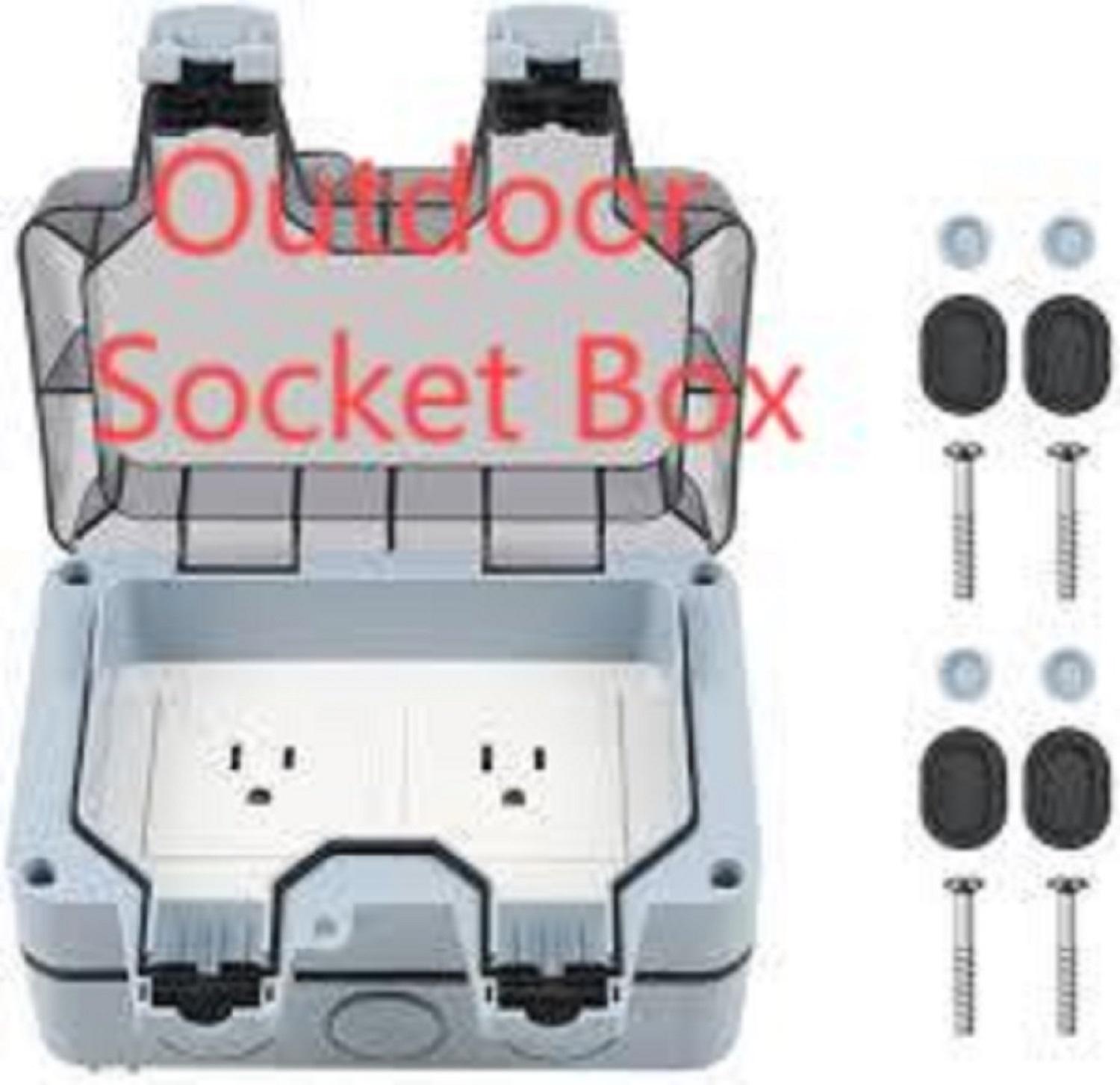
Careful planning at the specification stage avoids costly rework later, because a properly selected Socket Box placed at the right location improves accessibility and long-term safety, and choosing the correct Socket Box reduces moisture ingress, contamination, and mechanical damage in exposed installations. Early collaboration between designers, electricians, and facility managers clarifies load expectations, environmental stresses, and maintenance access, which together drive enclosure selection and mounting strategies for reliable service.
Defining the operational requirements
Start by listing actual use cases: expected currents, number of service operations per day, exposure to water spray or dust, and likelihood of physical impact. Consider whether the enclosure will host only power outlets or mixed functions such as signal ports and surge protectors. Clarify whether the installation must withstand washdowns, salt spray, or high UV exposure—these realities determine IP ratings, material choices, and gasket specifications that will influence lifecycle cost.
Materials, mechanical protection, and sealing systems
Material selection is foundational. UV-stable polymers resist embrittlement in sunlight while stainless steel or powder-coated aluminum resist corrosion in coastal and industrial atmospheres. Gasket geometry and compression method define long-term seal integrity; replaceable gasket channels simplify future upkeep. Reinforced corners, captive fasteners, and impact-resistant covers protect against accidental strikes, and strain-relief features at cable entries prevent conductor fatigue and seal compromise under mechanical stress.
Thermal management and electrical performance
High-load applications generate heat that can degrade both seals and electrical components. Choose enclosures with adequate internal volume, ventilation strategies, or heat-sinking features when continuous currents are significant. Contact materials and plating influence resistance and temperature rise; quality terminals minimize hotspots and provide consistent conductivity. Where internal surge protection or transformers are included, plan for their thermal behavior and ensure consistent airflow or thermal paths to avoid premature failure.
Nante product lines and modular advantages
Modular insert systems simplify customization and maintenance. By offering standardized mounting footprints and interchangeable power, signal, and protective inserts, modular families reduce spare-part inventories and speed on-site repairs. Clear labeling and pictorial wiring guides assist technicians during service. When selecting product families, look for designs that accept accessory modules—surge arrestors, RCD protection, or monitoring sensors—allowing a single enclosure to evolve with operational needs without complete replacement.
Installation practices and preventive maintenance
Correct installation prevents many lifecycle problems. Use appropriately sized glands, torque terminals to manufacturer specifications, and ensure cable routing avoids sharp bends around entry points. Anchor the enclosure with appropriate fasteners for the substrate and seal mounting interfaces against water penetration. Implement regular inspections to check gasket condition, fastener torque, and signs of contact discoloration. Document installation details—mounting height, cable types, and torque values—to streamline future service and to maintain asset records.
Safety compliance and testing considerations
Verify product test data for dielectric strength, temperature-rise under load, and ingress protection ratings relevant to your region. Seek enclosures with certifications or third-party test reports that match the intended application. For installations near sensitive processes or public access, consider tamper-resistant options, lockable covers, or integrated disconnects. Matching the enclosure to applicable standards reduces regulatory risk and helps protect both personnel and equipment.
Smart integrations and future-proofing
Consider boxes that can accept sensors or monitoring modules for temperature, moisture, or load. Remote monitoring enables predictive maintenance by identifying trends before they escalate into failures. Design choices that accommodate future accessories—extra knockouts, modular rails, and spare insert slots—help future-proof installations and reduce lifecycle costs by avoiding wholesale replacement when needs change.
Selecting the right balance of cost and lifecycle value
Avoid under-specifying to save short-term cost, and resist over-specifying when environmental demands do not warrant it. Balance procurement price against maintenance risk, downtime costs, and ease of repair. Investing in replaceable seals, modular inserts, and corrosion-resistant materials often pays for itself through extended service intervals and reduced emergency repairs.
Reliable enclosure selection, proper installation, and proactive maintenance together ensure a secure, long-lasting power distribution point for demanding environments. For detailed product specifications, configurator tools, and family options, visit www.nante.com/product/

 English
 Polski
 French
 Spanish
 Portuguese
 Deutsch
 Turkish
 Dutch
Dutch
 Italiano
 Russian
 Romaian
 Portuguese (Brazil)
 Greek
Greek