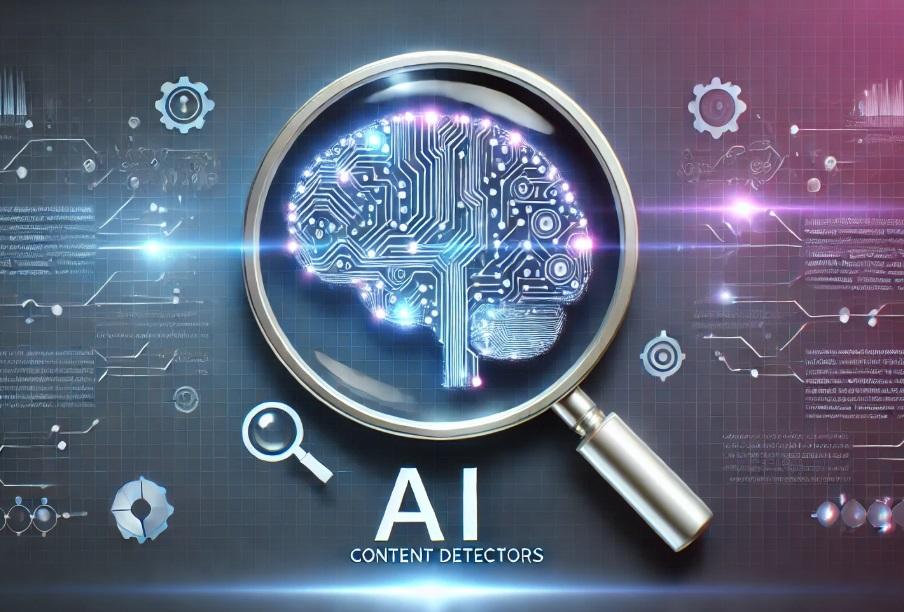
There was a time when words came only from human minds — messy, emotional, and beautifully unpredictable. Today, algorithms write poems, answer questions, and draft entire marketing campaigns in seconds. Somewhere in that storm of machine-written words, a new guardian quietly emerged: the AI detector.
But this isn’t a story about technology. It’s a story about truth.
When Machines Start to Sound Human
The line between human and machine expression is fading fast. You can’t always tell whether that article you’re reading was written by a late-night copywriter or a neural network trained on billions of sentences. The AI detector exists to pull that mask off — not to shame, but to clarify.
It listens differently than we do. While we feel tone and emotion, it scans for something subtler — digital fingerprints. Yet, the magic of this tool isn’t in the code that powers it. It’s in how it forces us to rethink authenticity in a world where both man and machine speak the same language.
Beyond Detection: A Tool for Digital Integrity
Think of the AI detector as a truth compass. It doesn’t accuse. It points. It guides editors, educators, and creators back toward human originality when the line blurs.
In universities, it protects intellectual honesty.
In media, it ensures credibility.
In marketing, it helps brands preserve their human tone.
But perhaps its biggest value lies in self-awareness. When writers use AI to brainstorm or polish ideas, detectors remind them where their own creativity begins — and where automation takes over. It’s not about rejection; it’s about responsibility.
What Makes AI Detection So Intriguing
Let’s be honest: detecting AI is almost poetic. Machines, after all, have learned from us. Their rhythm, logic, and syntax come from human examples. So when detectors spot machine text, they’re essentially recognizing a distorted reflection of ourselves.
An AI detector doesn’t “read” like a human — it measures flow, balance, predictability. If your sentences feel too perfect, too rhythmically even, too safe — that’s often the giveaway. True human writing breathes; it stumbles, contradicts itself, and surprises. Machines rarely do.
And therein lies the beauty: the more detectors evolve, the more we value imperfection.
The Paradox: Detectors Keep Us Creative
Here’s the irony — as machines get better at imitating humans, detectors push us to become more human.
Writers experiment with voice. Brands lean into emotion. Storytellers embrace rough edges. In trying to escape detection, we rediscover individuality.
The AI detector, in that sense, isn’t a gatekeeper. It’s a creative catalyst. It challenges creators to produce work that feels undeniably alive.
Why Businesses Should Care
For businesses, the question isn’t just “Was this content written by AI?” but “Does it sound real enough to trust?”
Audiences can sense synthetic tone instantly. The AI detector helps teams filter out what feels hollow and polish what feels human. It’s less about punishment and more about refinement — ensuring the final message carries authenticity that no algorithm can counterfeit.
In a world where credibility equals currency, AI detection becomes a brand strategy tool, not just a technical one.
The Future: From Detection to Collaboration
Soon, AI detectors will evolve beyond binary verdicts. They’ll act as editors, offering insights like:
-
“This section reads too robotic — add a personal story.”
-
“Your transitions sound algorithmic — make it conversational.”
The future isn’t about fighting AI; it’s about using detectors to tune AI-created content so that it resonates with real human audiences. That’s where creativity and technology finally meet halfway.
Final Thoughts
The AI detector is not a villain, nor a hero — it’s a mirror. It reflects the tension between our drive for speed and our hunger for authenticity.
In the rush to automate, it whispers a reminder: words still mean something.
And meaning — the kind that moves hearts, builds trust, and sparks thought — can’t be detected. It can only be felt.
For More Blogs: Click Here

 English
 Polski
 Arabic
 French
 Portuguese
 Deutsch
 Turkish
 Dutch
Dutch
 Italiano
 Russian
 Romaian
 Portuguese (Brazil)
 Greek
Greek