


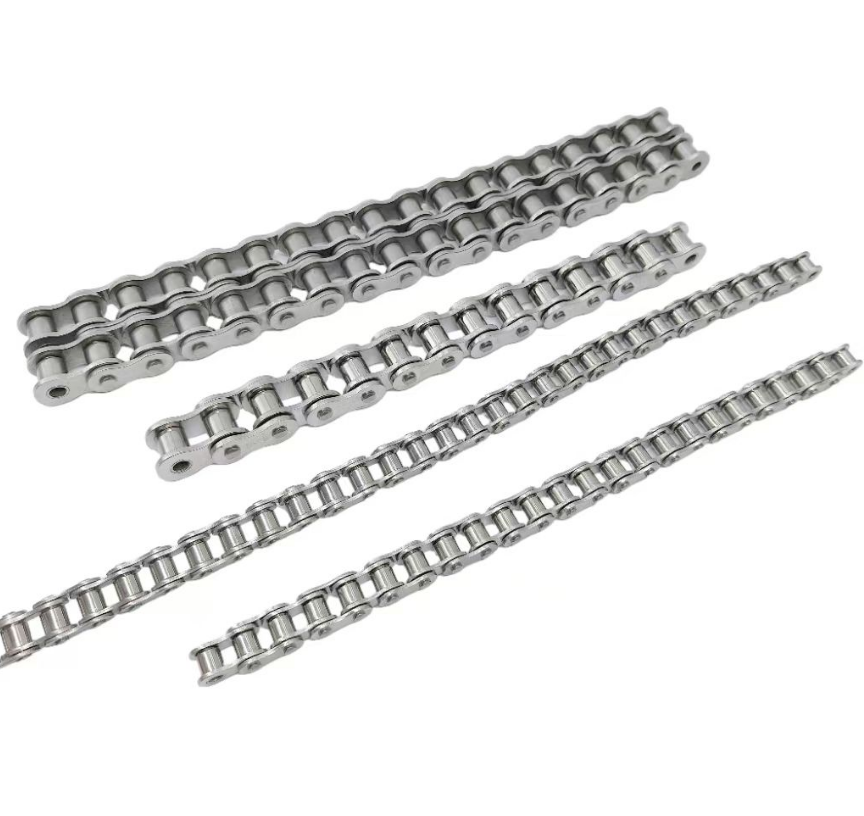
Mechanical system design requires careful integration of components to ensure efficiency and durability. In many industrial setups, the Heavy Roller Chain is selected when torque density and load resistance are primary concerns.
Design engineers typically calculate chain selection based on horsepower rating, rotational speed (RPM), and service factor. For example, systems operating between 100–600 RPM often require chain pitch sizes between 12.7 mm and 25.4 mm depending on torque demand.
Center distance between shafts is another important parameter. A recommended range is typically 30–50 times the chain pitch to ensure smooth engagement and reduce angular articulation stress.
Sprocket tooth count also affects performance. Small sprockets with fewer than 17 teeth may increase chain articulation angle, leading to faster wear, while larger sprockets distribute load more evenly.
Heavy Roller Chain systems can operate in single or multi-strand configurations. Multi-strand systems increase load capacity almost proportionally, making them suitable for high-torque conveyor systems.
Noise reduction and vibration control are also design considerations. Proper alignment, balanced sprockets, and controlled lubrication help maintain smooth operation across long production cycles.
In modern industrial engineering, chain drive systems remain a reliable and flexible solution for mechanical power transmission across diverse applications.

 English
 Arabic
 French
 Spanish
 Portuguese
 Deutsch
 Turkish
 Dutch
Dutch
 Italiano
 Russian
 Romaian
 Portuguese (Brazil)
 Greek
Greek