


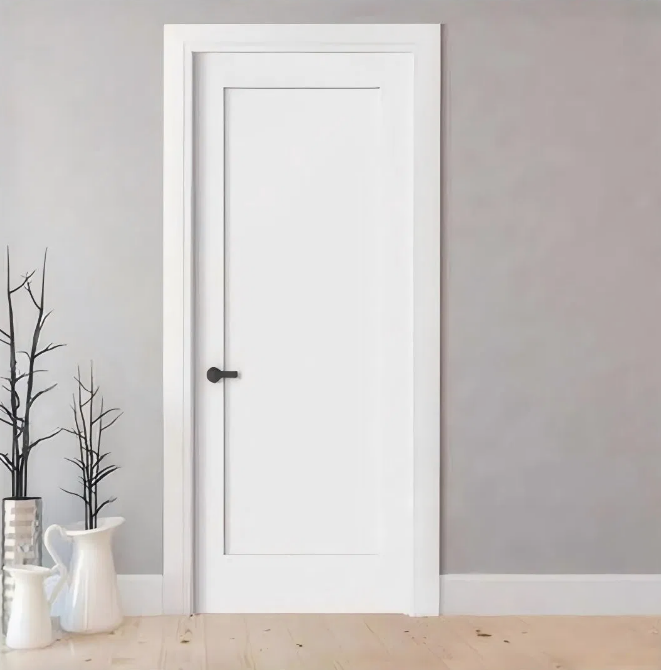
Solid Wood Interior Doors are often discussed in the context of sustainability due to their natural origin and renewability.
Unlike synthetic materials, solid wood is derived directly from processed timber, making it a renewable resource when responsibly managed. Lifecycle analysis shows that wood has lower embodied energy compared to many composite materials.
However, performance depends heavily on processing methods. Kiln drying is required to stabilize moisture levels and prevent biological degradation.
Wood species selection also affects environmental impact. Fast-growing species such as pine are often used for interior applications, while hardwoods like oak provide higher durability.
Manufacturing waste is typically recycled into wood chips or secondary composite materials, improving material efficiency.
Durability is another sustainability factor. Properly maintained Solid Wood Interior Doors can last for decades, reducing replacement frequency.
Surface treatments such as water-based coatings reduce volatile organic compound (VOC) emissions compared to traditional solvent-based finishes.
From a material science perspective, wood is anisotropic, meaning its strength varies along grain direction. This requires careful engineering during door design to prevent structural imbalance.
Overall, solid wood remains a viable sustainable material when combined with controlled processing and responsible forestry practices.

 Polski
 Arabic
 French
 Spanish
 Portuguese
 Deutsch
 Turkish
 Dutch
Dutch
 Italiano
 Russian
 Romaian
 Portuguese (Brazil)
 Greek
Greek