


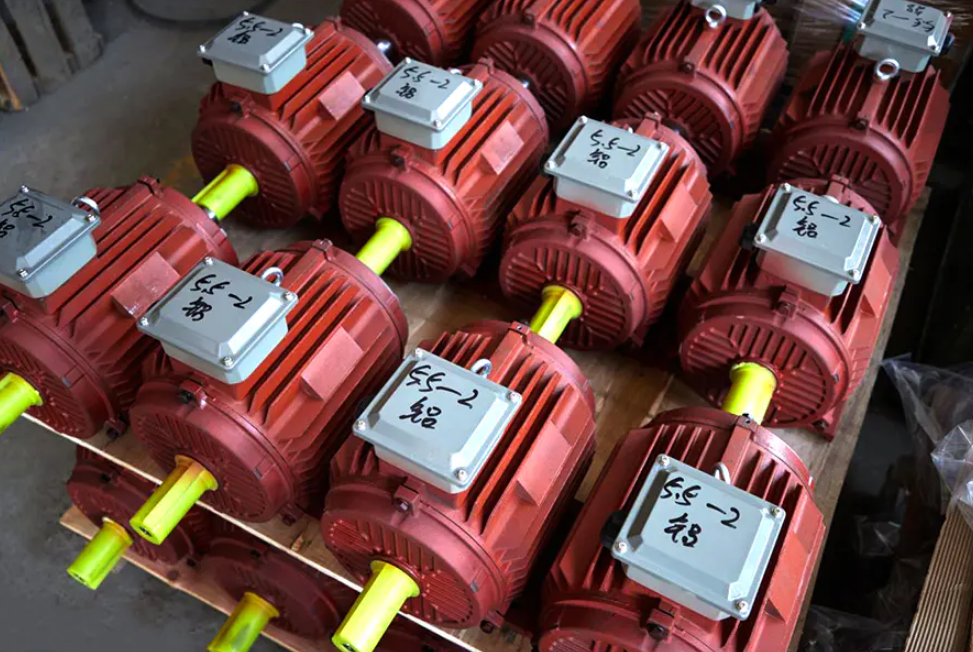
The Synchronous Three Phase Motor operates through the interaction of a rotating magnetic field in the stator and a magnetic field in the rotor. The stator windings, supplied by a three-phase AC source, generate a rotating electromagnetic field at synchronous speed.
Key electrical characteristics:
Supply voltage: 220V–690V
Frequency: 50/60 Hz
Phase sequence: ABC rotating field
Stator winding configuration: star (Y) or delta (Δ)
Rotor construction varies:
DC-excited wound rotor
Permanent magnet rotor
Hybrid excitation systems
When DC excitation is applied, rotor poles align with the stator magnetic field. Once locked, the rotor rotates in perfect synchrony with the stator field.
Speed relation:
Ns = 120f/P
Speed remains constant under load variations (within stability limit)
Typical performance parameters:
Power factor range: 0.8 lagging to 0.95 leading
Efficiency: up to mid-90% range in optimized designs
Starting current: high during synchronization phase
Operating temperature: -20°C to 40°C industrial standard environments
Synchronization is achieved when rotor speed approaches near synchronous speed before full magnetic locking occurs. Methods include:
Damper winding start
Pony motor start
Variable frequency drive acceleration
These motors are particularly effective in systems requiring stable phase alignment and synchronized operation with electrical grids or mechanical timing systems.

 Polski
 Arabic
 French
 Spanish
 Portuguese
 Deutsch
 Turkish
 Dutch
Dutch
 Italiano
 Russian
 Romaian
 Portuguese (Brazil)
 Greek
Greek