


Long before a player faces the first fallen demon or equips their first legendary item, the world of Sanctuary announces itself through sound. Diablo 4’s audio design is a masterclass in atmosphere, a soundscape that operates on both conscious and subconscious levels to shape mood, communicate danger, and immerse the player in a realm of perpetual dread. From the haunting whispers of the wilderness to the thunderous roar of a world boss, the auditory experience of Diablo 4 is as essential to its identity as any visual or mechanical element.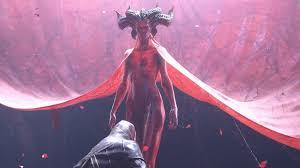
The musical score of Diablo 4, composed by a team that includes franchise veterans, strikes a delicate balance between homage and innovation. The familiar motifs of Tristram echo through certain tracks, connecting the game to its storied past, but the majority of the score ventures into new territory. Strings drag across the lower registers, creating a sense of creeping unease that never fully resolves. Percussion is used sparingly, reserved for moments of action where its impact is most felt. The music does not merely accompany the gameplay; it interprets it, swelling during moments of triumph and retreating into discordant whispers when danger lurks unseen.
Ambient sound design fills the spaces between musical cues with equal care. Wind howls across the frozen peaks of the Fractured Peaks, carrying with it the distant cries of wolves. Sandstorms in the Dry Steppes reduce visibility while their abrasive roar fills the audio spectrum, creating a palpable sense of environmental hostility. Dungeons are layered with the sounds of dripping water, skittering claws, and the muffled screams of the imprisoned. These ambient layers ensure that silence is never empty, that even in moments of calm, the player feels the weight of Sanctuary’s corrupted world.
Combat audio in Diablo 4 is a carefully engineered symphony of impact and feedback. Each class has a distinct sonic signature: the Barbarian’s weapons land with crushing weight, the Sorceress’s spells crackle and hiss with elemental fury, the Rogue’s attacks are sharp and precise. Enemy types are communicated through sound before they appear on screen. The shambling gait of a zombie, the chittering of a spider, the guttural chant of a fallen shaman—each audio cue provides actionable information, allowing skilled players to react before visual confirmation. The visceral crunch of a corpse explosion, the shatter of frozen enemies, the metallic clang of a blocked attack—these sounds provide the feedback loop that makes combat feel weighty and consequential.
Voice acting elevates the narrative beyond text on a screen. The performances in Diablo 4 are uniformly strong, with characters like Lilith, Inarius, and Lorath Nahr imbued with personality and pathos through their vocal delivery. The player characters themselves react to the world around them, offering contextual voice lines that acknowledge discoveries, deaths, and dialogue with NPCs. These moments of characterization, delivered through performance, create a connection between player and avatar that transcends the mechanical.
The technical implementation of the soundscape is equally impressive. Diablo 4 supports full 3D audio on compatible hardware, allowing players to locate enemies by sound alone. The mixing prioritizes gameplay-critical audio without sacrificing atmosphere, ensuring that the roar of a charging goatman never drowns out the subtle audio cue that signals a treasure goblin’s presence. This attention to detail transforms the audio from a passive element into an active tool for survival.
In an era where visual spectacle often dominates discussions of game production, Diablo 4’s soundscape serves as a reminder of audio’s power to define a world. The game’s sound design does not simply accompany the experience; it is the experience, the invisible hand that guides emotion, communicates threat, and transforms a collection of systems into a world worth inhabiting. To play Diablo 4 Gold with sound is to understand that Sanctuary exists not only in what is seen, but in what is heard in the darkness between the lightning strikes.

 Polski
 Arabic
 French
 Spanish
 Portuguese
 Deutsch
 Turkish
 Dutch
Dutch
 Italiano
 Russian
 Romaian
 Portuguese (Brazil)
 Greek
Greek