


In most action RPGs, gold serves as the universal lubricant of commerce. Players collect it from fallen enemies, spend it on repairs and vendors, and accumulate it in amounts so large that the numbers lose all meaning. Path of Exile 1 takes a different approach. There is no gold in Wraeclast. Instead, the game employs a currency system so unique, so deeply integrated into every aspect of gameplay, that it has become the defining feature of the entire genre for an entire generation of players.
The currency items of Path of Exile 1 are also its crafting materials. An Orb of Alteration rerolls magic items. A Chaos Orb rerolls rare items. An Exalted Orb adds a new modifier to a rare item. A Divine Orb rerolls the numeric values of existing modifiers. Each currency orb does something specific, something useful, something that players need at every stage of progression. Because these items have inherent utility, they also have inherent value. The economy of Path of Exile 1 runs on orbs, not gold, and the result is a player-driven market of astonishing complexity.
The keyword that defines this system is friction. Unlike gold, which accumulates passively and requires no thought to acquire, currency orbs demand active engagement. Players must identify which orbs are worth keeping, which are worth using, which are worth trading. The decision to use an Orb of Alchemy on a base item or save it for trading represents a real choice with real consequences. This friction creates depth, forcing players to engage with the economy rather than treating it as background noise.
For new players approaching Path of Exile 1 for the first time, the currency system represents one of the steepest parts of the learning curve. The names mean nothing initially. The values are opaque. The instinct to use orbs as soon as they drop leads to waste and frustration. The community has responded with resources, price check tools, and extensive documentation, but the knowledge transfer remains a barrier. Those who persist, however, gain access to an economy that rewards understanding and punishes ignorance.
The relationship between currency and crafting deserves special attention. Unlike games where crafting involves menus and recipes, crafting in Path of Exile 1 involves applying currency orbs to items in specific sequences. A simple craft might involve using an Orb of Transmutation, then an Orb of Augmentation, then a Regal Orb. A complex craft might involve hundreds of orbs, multiple steps, and deep knowledge of modifier pools and weighting. The currency items are the tools of this trade, and master craftsmen are those who understand how to use them efficiently.
The trade system, despite its limitations, enables the currency economy to function. Players list items on official trade sites, set prices in currency terms, and meet in hideouts to complete exchanges. The third-party tools that have grown around this system, from price check overlays to live search notifications, demonstrate the community's commitment to making the economy work. Trade is not seamless in Path of Exile 1, but it is functional, and for many players, the friction is part of the appeal.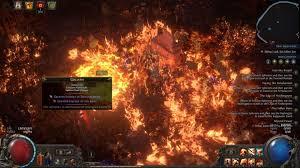
The value of currency fluctuates based on league mechanics, meta shifts, and time within the league cycle. Early in a league, Chaos Orbs hold tremendous value as players race to acquire basic gear. Later, Exalted Orbs become the standard for high-end trading. The rarest orbs, like Mirrors of Kalandra, function as currency only for the wealthiest players, items so valuable that they represent entire builds rather than incremental upgrades.
In the end, the currency system of POE 3.28 Currency succeeds because it integrates economy with gameplay. Every orb that drops is both potential wealth and potential crafting material. Every decision to use or save represents engagement with systems that span the entire game. The currency of chaos is also the currency of creation, and in Wraeclast, those two forces are forever intertwined.

 English
 Arabic
 French
 Spanish
 Portuguese
 Deutsch
 Turkish
 Dutch
Dutch
 Italiano
 Russian
 Romaian
 Portuguese (Brazil)
 Greek
Greek