


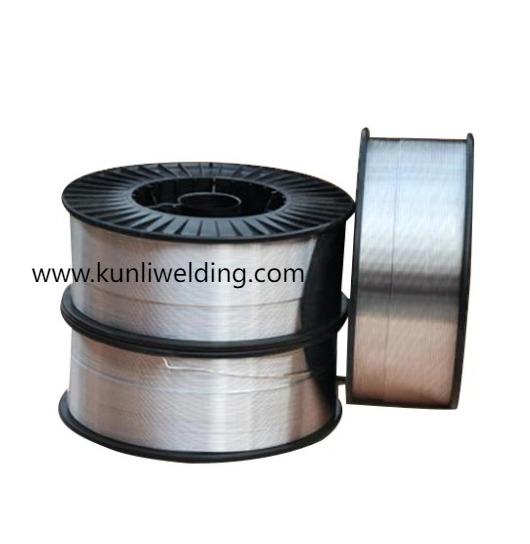
When you invest in quality aluminum welding wire, the packaging it arrives in matters far more than most welding engineers initially realize. Reputable Aluminum TIG Wire Suppliers understand that the journey from manufacturing floor to your welding table is full of contamination risks, and thoughtful packaging design is the first real line of defense against those risks. Aluminum is a reactive metal. Even minimal exposure to moisture, airborne oils, or handling residues can compromise the surface condition of the wire before it ever touches your tungsten electrode. The result shows up in your weld pool as porosity, inconsistent fusion, or arc instability. If you have ever chased a quality problem back to the wire itself, packaging failure is often the silent culprit.
Moisture Barrier Integrity
The single most telling sign of careful packaging is a genuine moisture barrier. Look for a sealed inner layer that is not simply a loose plastic bag but a heat-sealed, vapor-resistant wrap. Moisture is particularly damaging to aluminum wire because it introduces hydrogen into the weld, which is the leading cause of porosity in aluminum TIG applications. When you open a new spool or coil, you should feel a slight resistance as the inner seal is broken. If the package feels as though it was never truly sealed, treat that as a warning sign about the overall quality management behind the product.
Desiccant packets placed inside the sealed layer are another positive indicator. Their presence tells you that the supplier recognizes the hygroscopic nature of aluminum and has taken a practical step to absorb any residual moisture during storage and shipping. Check whether those packets are still firm or have already fully saturated, because a saturated desiccant in an unopened package suggests a compromised seal somewhere.
Physical Protection and Geometric Stability
Aluminum TIG wire has a relatively soft surface compared to steel filler metals. Scratches, dents, or deformation along the wire diameter are not cosmetic issues. They affect how the wire feeds through your fingers during manual TIG welding, how consistently it melts at the arc, and whether contamination from the wire surface enters the weld pool. Outer packaging should be rigid enough to prevent crushing or coil distortion during transit. Foam inserts, formed cardboard, or molded pulp trays all suggest a supplier who thinks about geometric stability during shipping, not just during manufacturing.
Spools should be wound consistently without loose wraps, crossed layers, or tight spots that could cause the wire to kink when you unwind it at the bench. Uneven winding is a process stability issue, not just a cosmetic one, because kinks or surface irregularities change the way heat conducts through the wire at the arc.
Labeling Transparency and Traceability
Clean, clear labeling on the outer packaging is a practical indicator of supplier discipline. Welding process developers need to verify alloy classification, wire diameter, and heat or lot numbers to maintain process repeatability across production runs. Packaging that provides easy access to this information without requiring you to dig through fine print demonstrates respect for the technical environment where the wire will be used.
A lot number that traces back to a material certificate is particularly valuable when you are qualifying a welding procedure or investigating a quality nonconformance. If the packaging makes this information hard to find or inconsistent between batches, the traceability chain is already compromised before the wire reaches your torch.
Handling Instructions and Storage Guidance
Well-designed packaging often includes clear handling guidance printed directly on the outer carton or inner wrap. Instructions about storage temperature ranges, recommended shelf life after opening, and advice on re-sealing partial spools all communicate that the manufacturer understands how aluminum wire behaves over time. These small details give welding engineers confidence that the product has been developed by people who work closely with the realities of production welding environments.
When evaluating suppliers, hold the packaging itself to the same standard you would apply to the wire. Thoughtful outer protection, a reliable moisture seal, clear traceability information, and evidence of attention to geometric stability during shipping are all signs that the metallurgical work done during manufacturing will actually arrive intact at your workstation.
Packaging is a promise made before the wire ever meets your weld pool. Choosing Aluminum TIG Wire Suppliers who understand that promise helps protect not just your materials, but your entire welding process. For sourcing guidance and product details, visit https://kunliwelding.psce.pw/8p6qdv — are you giving packaging the same scrutiny you give the wire itself?

 English
 Polski
 French
 Spanish
 Portuguese
 Deutsch
 Turkish
 Dutch
Dutch
 Italiano
 Russian
 Romaian
 Portuguese (Brazil)
 Greek
Greek