


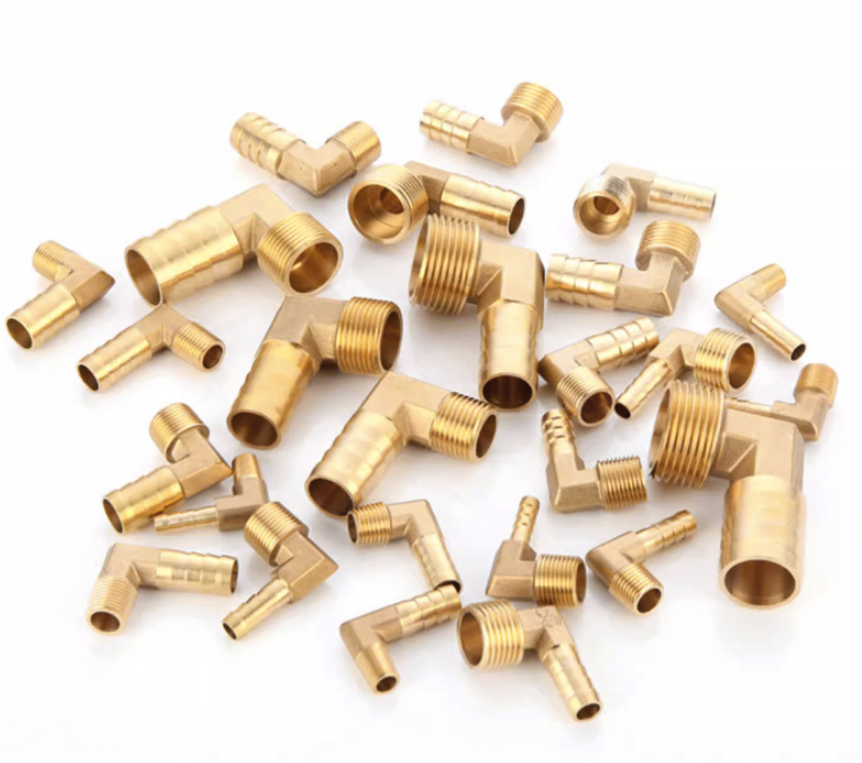
Water pressure is not generated by the pump alone; it is maintained by the path the water travels. Every elbow, tee, and adapter creates turbulence and friction loss. When designing a high-efficiency hydronic heating system or a multi-fixture bathroom, the choice of connection method matters significantly. The geometry of PEX Pipe Fittings varies widely between manufacturers and types, impacting the actual flow rate more than the pipe itself.
Consider the difference between an expansion-style fitting and a barbed insert fitting. An expansion PEX fitting (ASTM F1960) is designed to be inserted into the pipe. The fitting’s inner diameter is generally very close to the inner diameter of the tubing. Conversely, a traditional brass barbed insert fitting for crimping must have a smaller inner diameter to maintain structural integrity of the metal. When you push a barbed fitting into 1/2-inch PEX, the internal bore might drop to 3/8-inch. If a system uses twenty such PEX Pipe Fittings, the cumulative effect is a significant pressure drop at the fixture—noticeable when someone flushes a toilet while the shower is running.
For high-performance applications, selecting PEX Pipe Fittings with larger internal bores is worth the extra cost. Some manufacturers produce "full flow" or "deep socket" fittings that reduce the bottleneck effect. You can also reduce the number of fittings by bending the PEX tube. A 90-degree turn made by bending the pipe (with a support bracket to prevent kinking) creates less friction loss than a 90-degree elbow fitting. Because PEX is flexible, you can often curve it around an obstruction, eliminating two 90-degree fittings and four crimp connections entirely.
Furthermore, the surface roughness of the fitting matters. Plastic PEX Pipe Fittings often have a smoother interior surface than brass. While brass is stronger, it can develop pitting or scale buildup over decades of hard water use. For closed-loop hydronic systems (radiant floor heating), this is less of a concern. However, for potable water systems in areas with aggressive scale, polymer fittings maintain their flow coefficient (Cv) over time. Always calculate the equivalent length of your fitting array. If your pipe run is 50 feet, the fittings might add another 20 feet of "virtual" resistance. Proper planning ensures you get a hot shower, not a disappointing trickle.

 English
 Polski
 French
 Spanish
 Portuguese
 Deutsch
 Turkish
 Dutch
Dutch
 Italiano
 Russian
 Romaian
 Portuguese (Brazil)
 Greek
Greek