


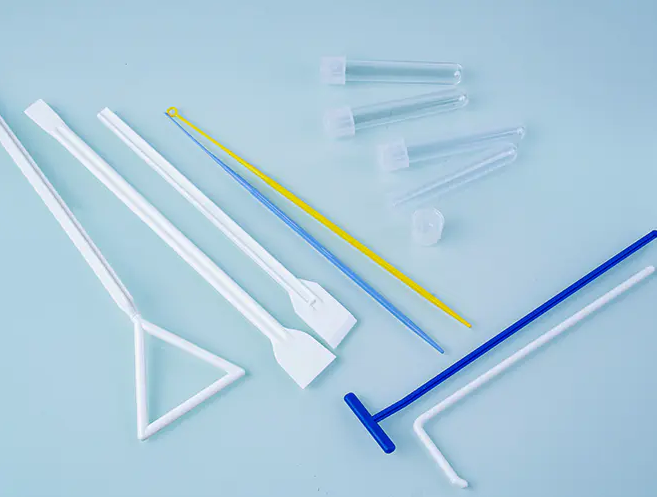
Stepping into a microbiology lab for the first time can be overwhelming. The autoclaves are hissing, the incubators are humming, and there is a bewildering array of plastic tubes and dishes everywhere. Unlike physics or chemistry, microbiology relies heavily on disposables to keep the "unseen world" contained. If you are a student or a new technician, understanding the specific names and uses of these items is half the battle won. Let’s break down the essential Microbiology Lab Consumables you will encounter every single day.
First, the Petri Dish (or "plate"). This is the icon of microbiology. Typically 90mm in diameter (though 60mm and 150mm sizes exist), it is a shallow, cylindrical dish with a lid that overlaps the base. The overlap is a deliberate engineering choice—it allows air to circulate (if vented) but makes it difficult for dust-borne contaminants to fall directly onto the agar. You will often see "Triple Vented" marks on the lid. These are not defects; they are essential for gas exchange if you are growing obligate aerobes. Never use a non-vented dish unless you specifically want an oxygen-free environment.
Second, Tubes. You will see them everywhere. Culture tubes (16 x 125 mm or 13 x 100 mm) are used to grow liquid broths. Centrifuge tubes (15 mL and 50 mL conical bottoms) are used to spin down cells. Look at the bottom—conical tubes concentrate the pellet at the very tip, making it easier to aspirate the supernatant. The plastic matters: polypropylene (PP) tubes can be frozen and spun hard (up to 12,000 x g), while polystyrene (PS) tubes are brittle and usually for storage only. Always check the RCF rating on the side of the tube before placing it in a high-speed centrifuge; exceeding that limit risks a catastrophic failure and a very loud noise.
Third, Liquid Handling Aids. This includes serological pipettes (usually 1 mL, 5 mL, 10 mL, 25 mL, and 50 mL) and micropipette tips (P10, P200, P1000). Serological pipettes are color-coded for size (e.g., 1 mL is often red, 25 mL is green). They are used with a motorized pipette filler. Micropipette tips fit on your handheld pipettors. A standard P200 tip holds 200 microliters. The crucial feature here is the "filter" vs. "non-filter." For basic bacterial subculturing, non-filtered is fine. For molecular work (PCR), you must use filtered tips to prevent sample carryover.
Finally, Spreaders and Loops. You cannot touch the agar with your finger. Instead, you use an L-shaped cell spreader to push liquid bacteria evenly across the surface of a plate. These are usually made of polypropylene and are sterile. Inoculating loops (1µL or 10µL) are used to pick a single colony off a plate to start a new culture. The loop is thin; if you bend it, throw it away. Remember, the goal of all these Microbiology Lab Consumables is to act as a barrier between you and the bacteria, and between one bacteria and another. When in doubt, throw it out. Sterility is the golden rule.

 English
 Polski
 Arabic
 French
 Spanish
 Portuguese
 Deutsch
 Turkish
 Italiano
 Russian
 Romaian
 Portuguese (Brazil)
 Greek
Greek