


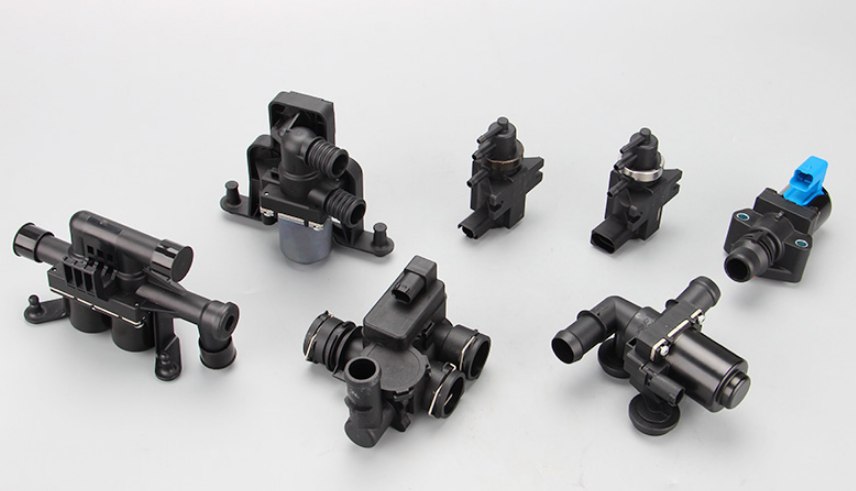
Drivers often experience inconsistent cabin heating or delayed engine warm-up, especially in modern vehicles equipped with start-stop systems. One common cause is malfunction in the Auxiliary Cooling Pump.
This pump is responsible for maintaining coolant circulation when engine RPM is low or engine is off. It ensures heat transfer to components such as:
Heater core
Turbocharger housing
EGR cooler
Typical symptoms of failure include:
Heater output drops below 40°C air temperature at vents
Coolant stagnation after shutdown
Engine temperature fluctuation of ±10°C during idle
The Auxiliary Cooling Pump in passenger vehicles usually operates at:
Voltage: 12V DC
Flow rate: 15–50 L/min
Power: 30–120W
Control logic is often ECU-driven. PWM signals regulate pump speed from 30% to 100% duty cycle, depending on thermal demand.
Technicians frequently test pump performance by measuring coolant flow differential across the heater core or monitoring current draw, which typically ranges from 2A to 8A depending on load.

 Polski
 Arabic
 French
 Spanish
 Portuguese
 Deutsch
 Turkish
 Dutch
Dutch
 Italiano
 Russian
 Romaian
 Portuguese (Brazil)
 Greek
Greek